
Used RAM Truck Towing and Payload Guide for Colorado Springs, CO Drivers
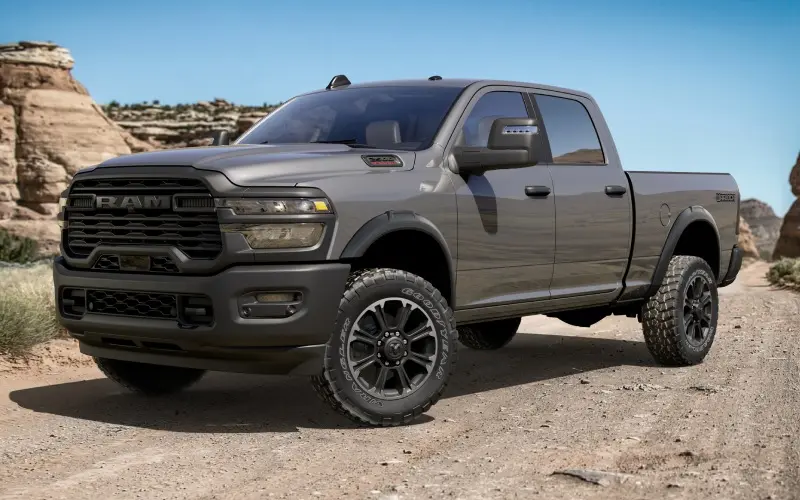
McCloskey Big Joe Auto - Used RAM Truck Towing and Payload Guide for Colorado Springs, CO Drivers
Shopping for a used RAM truck to tow your camper, boat, or work trailer around the Front Range? You’re in the right place. Below is a practical, real-world guide to help you choose the right RAM 1500, 2500, or 3500 configuration for towing and payload. We’ll cover how to decode the numbers on the door jamb, how different engines and axle ratios influence capability, and which factory towing features make a tangible difference on Colorado highways and county roads.
First, get familiar with the key ratings stamped on the driver’s door jamb and found in the owner’s manual. These numbers tell you what your truck is engineered to handle. Matching the right configuration to your trailer and gear is the foundation of safe, stress-free towing—especially with elevation changes and crosswinds common along I-25 and US-24.
- GVWR: The maximum allowable weight of the truck and everything in it—fuel, passengers, cargo, and tongue weight.
- GAWR (Front/Rear): The most weight each axle is designed to carry. Pay attention to rear GAWR, as tongue weight rests primarily on the rear axle.
- Payload: The maximum combined weight of people and cargo the truck can carry. Tongue weight counts as cargo.
- GCWR: The total allowable weight of the truck, cargo, passengers, and a fully loaded trailer.
- Max Trailer Weight: The heaviest trailer the manufacturer rates the truck to tow when properly equipped.
Engines and transmissions directly influence towing character. RAM 1500 models commonly feature the 3.6L Pentastar V6 with available eTorque or the 5.7L HEMI V8 with or without eTorque. The Pentastar is smooth and efficient for lighter trailers and everyday duty, while the HEMI V8 supplies confident mid-range torque and relaxed highway passing with moderate trailers. In heavy-duty RAM 2500 and 3500 trucks, the 6.4L HEMI delivers consistent power and easy maintenance, while the 6.7L Cummins Turbo Diesel I6 is a long-haul favorite for serious towing thanks to abundant low-end torque, exhaust brake functionality on many models, and durable automatic transmissions calibrated for heavy loads.
Axle ratios matter more than many shoppers realize. A numerically higher ratio (for example, common options like 3.73 or 4.xx) multiplies torque at the wheels and can raise tow ratings at the expense of slightly higher engine RPM on the highway. A numerically lower ratio (like 3.21 or 3.55, often seen on RAM 1500) favors fuel-conscious cruising but may reduce maximum tow ratings. If your routine includes pulling a trailer up the hill toward Woodland Park or over Monument Pass, selecting the higher axle ratio available for your engine can make each climb smoother and keep transmission temperatures in check.
Factory towing equipment is the difference between “it can” and “it can do it well.” Many used RAM trucks include an Integrated Trailer Brake Controller that communicates with electric or electric-over-hydraulic trailer brakes, giving you direct, proportional control from the dash. Tow/Haul Mode adjusts shift points to reduce gear hunting and can engage grade shifting on descents to help maintain speed without riding the brakes. Trailer-Tow Mirrors extend visibility, while a 7-pin connector powers trailer brakes and backup lamps (and a 4-pin supplies basic lighting when needed). Trailer Sway Control, standard on many models, can apply selective braking to calm oscillations.
- Hitch Class: Verify the receiver class matches your trailer’s coupler and tongue weight. Many half-tons use Class III/IV, while heavy-duty models see Class V.
- Tongue Weight: Aim for 10-15% of the trailer’s total loaded weight on the hitch; use a weight-distributing hitch if recommended.
- Brake Controller: Calibrate gain in an empty lot; brakes should engage smoothly without jerking or pushing the truck.
- Tire Load Rating: Check the tire sidewall and maintain PSI appropriate for load; consider LT tires for frequent towing.
- Cooling Package: Many RAMs include heavy-duty engine and transmission coolers—confirm their presence if you tow in summer or at altitude.
Ride and handling are also shaped by the suspension. RAM 1500’s multilink coil-spring rear suspension delivers a controlled, comfortable ride without cargo. When loaded, the available Active-Level Four Corner Air Suspension maintains ride height for better headlight aim and handling. On HD models, stout rear leafs or available air assist keep the truck level under heavy tongue weight. If you plan off-pavement travel to trailheads or job sites, look for skid plates, all-terrain tires, and an anti-spin rear differential for improved traction.
Don’t overlook payload. It’s not just tools and coolers—passengers and accessories (like a bed rack or topper) count toward payload, and tongue weight counts too. A common pitfall is pairing a high tow rating with a lower payload sticker; the numbers must work together. If your family, gear, and trailer tongue exceed the payload rating, step up to a configuration with a higher sticker—often a different axle ratio, HD shocks, or an HD model is the answer.
What about 4x2 vs. 4x4? For paved-road towing, a 4x2 works well and can carry slightly more payload. If your routine includes muddy jobsites, snow-packed county roads, or launching a boat on a slick ramp, 4x4 is worth its minor weight penalty because selectable low range helps you start moving without wheelspin and provides added control while maneuvering a trailer on uneven ground.
Now, a quick pre-tow checklist you can run through at home before pointing the hood toward the mountains or the plains:
- Weights and Ratings: Confirm GVWR, GAWR, and Max Trailer Weight against your loaded truck and trailer.
- Hitch and Coupler: Inspect pins, clips, and latch; verify correct ball size and torque.
- Electrical Connections: Test running lights, turn signals, and brake lights on the trailer.
- Brake Controller: Set gain, then perform a slow-brake test in a safe area.
- Tires and Torque: Check PSI when cold and torque lug nuts on both truck and trailer.
- Load Balance: Distribute cargo evenly in the trailer to avoid fishtailing; secure with straps.
- Mirrors and Cameras: Adjust tow mirrors; use the backup camera to confirm hitch alignment before departure.
If you’re comparing multiple used RAM configurations, bring your trailer measurements and typical cargo list. Matching your use case to an engine, axle ratio, bed length, and cab style saves time and builds confidence from day one. That’s where expert guidance matters—one conversation can narrow dozens of listings to two or three ideal candidates.
McCloskey Big Joe Auto is happy to help you sort out the specs that fit your life, whether that’s weekday hauling and weekend camping or a dedicated work rig with long idle times and frequent stops. Our team is serving Colorado Springs, Fountain, and Fort Carson with friendly, knowledgeable support before and after the sale, including service resources that keep your RAM ready for the next mile.
Frequently Asked Questions:
How do I choose between a RAM 1500, 2500, and 3500 for towing?
Start with your real, loaded trailer weight and tongue weight. If your trailer and cargo are moderate and you value a smooth ride, a RAM 1500 with the right axle ratio often fits perfectly. If your trailer weight and tongue load are heavy or frequent, look at RAM 2500 or 3500 for higher payload, stouter frames, and available diesel torque.
Does the 6.7L Cummins Turbo Diesel always mean the highest tow rating?
Not always. The final rating depends on cab, bed, drivetrain, axle ratio, and cooling packages. While the Cummins is a great match for heavy towing, verify the exact truck’s sticker and manufacturer ratings to ensure it meets your trailer’s demands.
Is eTorque on the HEMI V8 good for towing?
eTorque can enhance launch feel and smooth out shifts, particularly with moderate loads. For larger trailers, focus on axle ratio and cooling packages, and confirm the exact tow rating. eTorque is an aid, not a replacement for proper configuration.
What’s the simplest way to check if a used truck is tow-ready?
Look for the Integrated Trailer Brake Controller, a 7-pin wiring connector, receiver hitch class that matches your needs, Tow/Haul Mode, and a cooling package. Your sales professional can confirm these with a quick inspection.
Should I use a weight-distributing hitch?
If your trailer manufacturer recommends it or your tongue weight approaches your receiver’s limit, a weight-distributing hitch helps level the truck and trailer, improves steering control, and may be required to achieve the truck’s maximum listed tow rating.
Request more information