
How to Winterize Your Truck Before the Colorado Snow Hits
How to Winterize Your Truck Before the Colorado Snow Hits
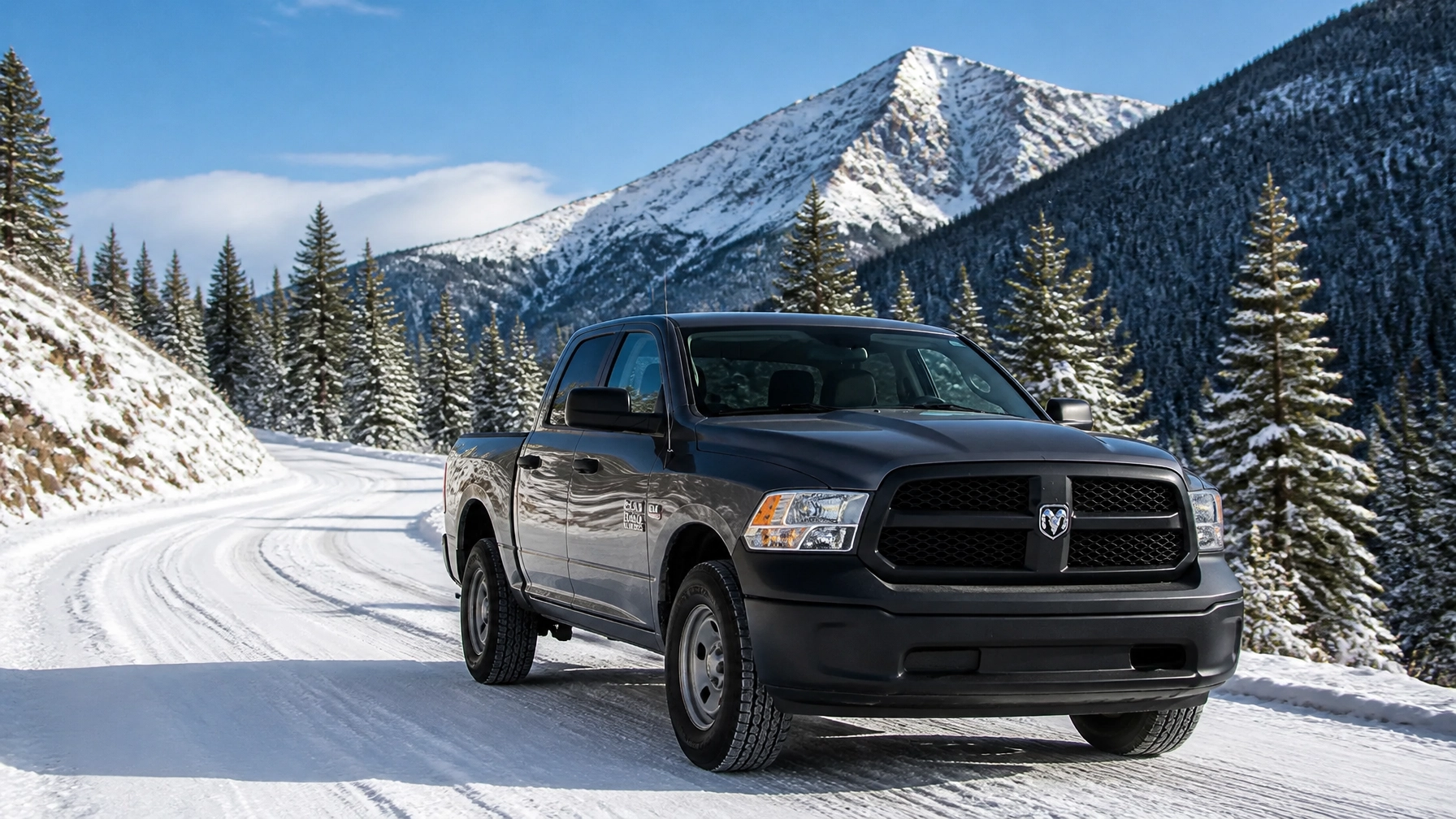
Colorado Springs weather can change quickly. A clear morning commute on I-25 can turn into a snowy drive home, while trips through Monument Hill, Black Forest, or Ute Pass may bring colder temperatures and slicker roads than you expected.
Whether you already own a pickup or are comparing trucks for sale in Colorado Springs CO, a little preparation can prevent common winter problems. Here is a practical truck winterization checklist covering fluids, tires, 4WD, battery health, emergency equipment, and protection from Colorado road salt.
Start with fluids before the first freeze
Fluids are easy to overlook because many problems stay hidden until temperatures drop. Before winter arrives, check the following items or have a service professional inspect them.
Test the coolant and antifreeze
Your engine coolant needs enough freeze protection for Colorado conditions. A service technician can test the coolant mixture with the proper equipment and confirm whether it is still protecting the cooling system.
Many vehicles use a premixed 50/50 coolant and water formula, but the correct type and mixture depend on the truck. Check the owner’s manual before adding fluid. If the coolant is contaminated, too weak, or overdue for replacement, a flush and refill may be appropriate.
Never remove a radiator cap while the engine is hot. A cooling system inspection should also include the reservoir, hoses, radiator, and visible signs of leaks.
Fill with cold-weather washer fluid
Standard summer washer fluid can freeze in the reservoir, lines, or spray nozzles. Replace it with winter-rated windshield washer fluid labeled for temperatures of at least -20°F or lower.
Fill the reservoir before a major storm and keep an extra container at home or in your garage. Washer fluid is especially important when road spray, salt, and slush reduce visibility on the I-25 corridor.
Prepare your tires for snow and ice
Four-wheel drive can help your truck move through snow, but your tires are still the main point of contact with the road. Good winter preparation starts with tire condition.
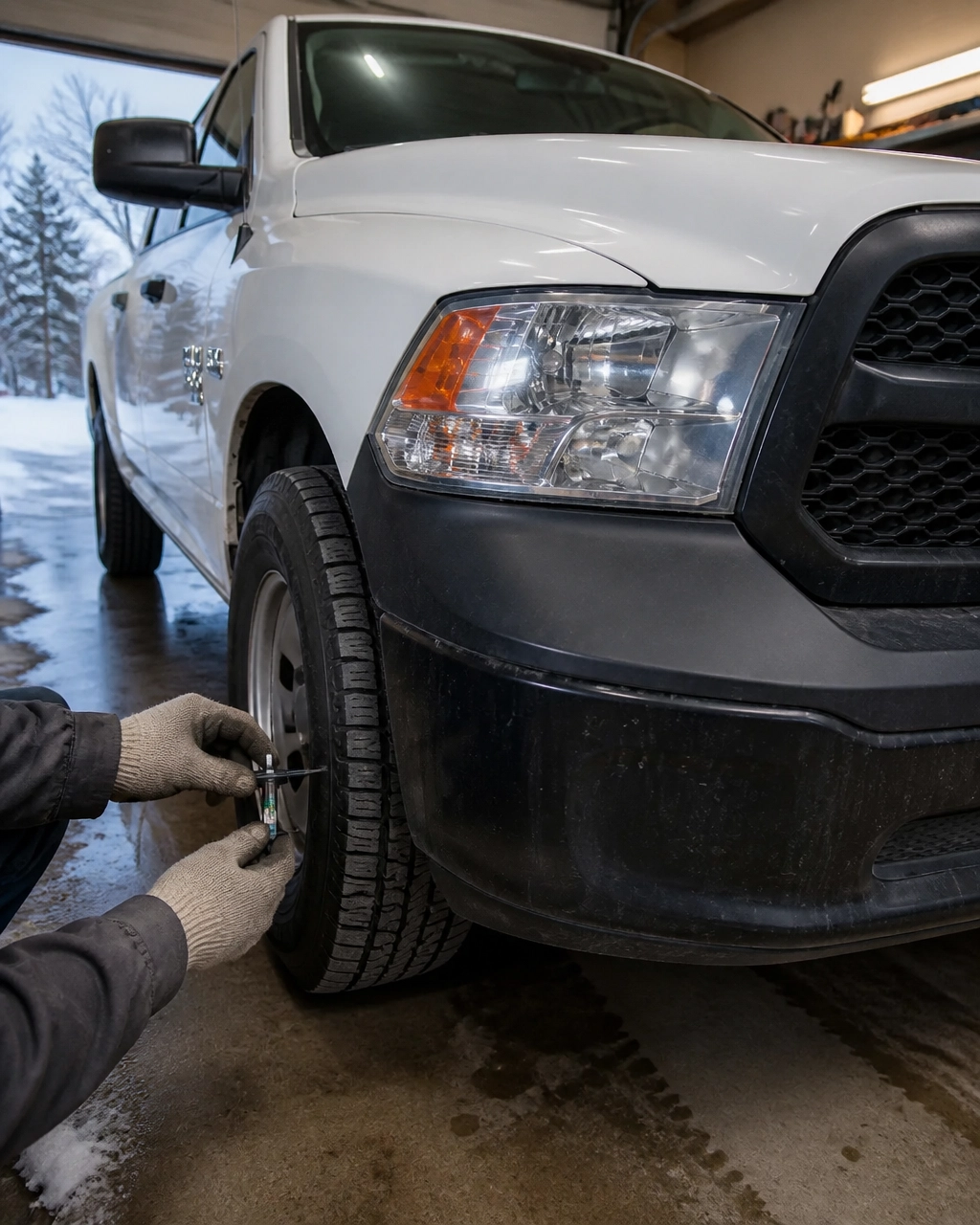
Check tread depth and wear
Colorado Department of Transportation guidance includes at least 3/16-inch of tread for safe winter operation. If your tires are approaching that level, replacement may be worth considering before the season begins. Uneven wear can also point to alignment, suspension, or inflation problems.
Look for:
- Uneven wear across the tread
- Cracks or bulges in the sidewalls
- Exposed cords
- Nails or other damage
- Tires that are significantly older than the others
A tread depth gauge provides the most accurate measurement. If you do not have one, a tire shop can check the tires quickly.
Decide between winter tires and all-season tires
Dedicated winter tires use rubber compounds designed to stay flexible in cold temperatures. They are often the better choice if you regularly drive mountain roads, leave Colorado Springs before roads are cleared, or travel through heavy snow and packed ice.
High-quality all-season or all-weather tires may be suitable for drivers who mostly commute around town and can avoid driving during the worst conditions. Look for the mountain snowflake symbol, also called the Three-Peak Mountain Snowflake designation, when you want a tire specifically tested for severe snow conditions.
Set the pressure when the tires are cold
Cold air lowers tire pressure. Check each tire in the morning before driving, then adjust the pressure to the number on the driver’s door placard. Do not use the maximum pressure printed on the tire sidewall as your normal setting unless the vehicle manufacturer specifies it.
Recheck pressure whenever temperatures change sharply. Proper inflation supports handling, braking, tire life, and fuel economy.
Carry chains and know how to use them
Keep tire chains in the truck if your routes may require them. Before the first storm, confirm that the chains fit your tire size and are approved for your specific vehicle. It is also smart to practice installing them at home while your hands are warm and the ground is dry.
Review current Colorado traction and chain law information before traveling through the mountains. Requirements can vary based on road conditions, location, and vehicle type.
Inspect the 4WD or 4x4 system
If your truck has four-wheel drive, test the system before you need it. Engage four-wheel drive according to the owner’s manual and confirm that the indicator lights operate correctly. If the system grinds, refuses to engage, or does not disengage properly, schedule an inspection.
Ask a technician to check:
- Transfer case fluid and operation
- Front and rear differential fluid
- Driveshafts and universal joints
- Axles and CV joints
- Leaking seals
- Warning lights or unusual noises
Remember, 4WD helps your truck accelerate and maintain traction, but it does not shorten stopping distances on ice. Your tires, speed, following distance, and braking habits still matter.
Test the battery and charging system
Cold weather places extra demands on a truck battery. A battery that starts the engine reliably in October may struggle during a cold Colorado morning.
Have the battery load-tested before winter. The inspection should also include the alternator and charging system, because a healthy battery will not stay charged if the alternator is not working correctly.
Check for:
- Corrosion around the terminals
- Loose battery cables
- Slow engine cranking
- Flickering lights
- A battery warning light
- A battery that is several years old
If your truck has a diesel engine or aftermarket accessories such as a winch, heated equipment, or additional lighting, battery and charging-system condition deserve even more attention.
Check the heater, defroster, and wiper blades
A working heater is a comfort feature, but the defroster is a visibility and safety system. Turn on the front and rear defrosters and make sure warm air reaches the glass. If airflow is weak, the blower makes unusual sounds, or the windshield remains fogged, have the system checked.
Replace wiper blades that leave streaks, skip across the windshield, or crack in the cold. Winter blades can help in areas where snow and ice build up, but any blade should be in good condition before a storm.
Also confirm that your headlights, brake lights, turn signals, and hazard lights work properly. Clean snow and ice from every light before driving.
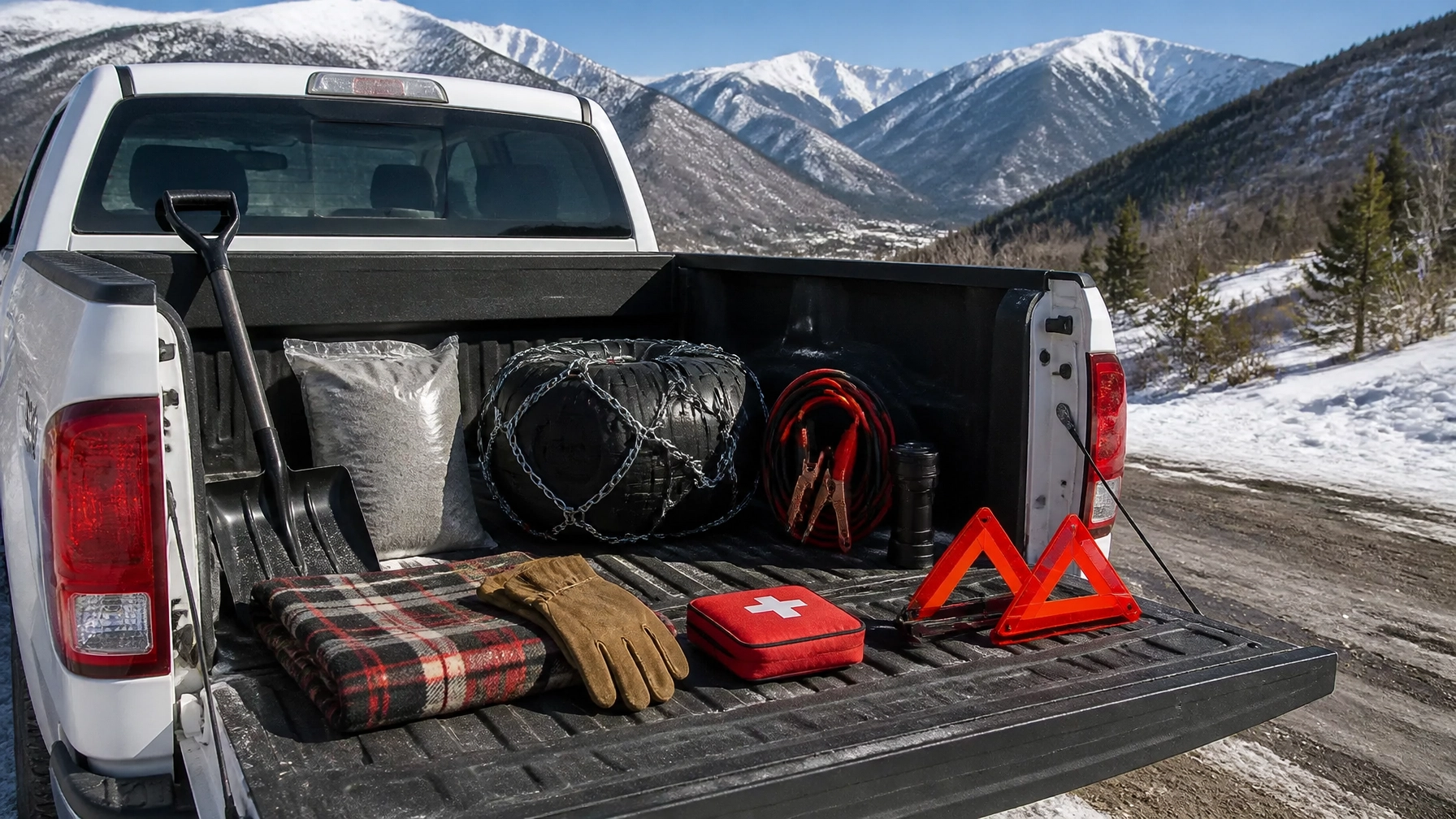
Build a Colorado winter emergency kit
A truck gives you extra storage, so use it wisely. Keep an emergency kit in a secure location where it will not shift around or become buried under tools and cargo.
The CDOT winter preparedness checklist recommends items such as a snow brush, shovel, flashlight, blanket, water, first-aid supplies, tire chains, jumper cables, and warning devices.
Your kit should include:
- Ice scraper and sturdy snow brush
- Small shovel
- Tire chains and tow strap
- Jumper cables or a charged jump starter
- Tire pressure gauge
- Flashlight with spare batteries
- Reflective triangles or flares
- Blanket, coat, gloves, hat, and extra socks
- Bottled water and non-perishable snacks
- First-aid kit and necessary medications
- Hand warmers
- Bag of sand or non-clumping kitty litter for traction
- Phone charger or portable power bank
- Extra winter washer fluid
If you travel toward Woodland Park, Rampart Range, or other areas where help may take longer to arrive, add more warm clothing and supplies. Keep the fuel tank at a reasonable level during severe weather, and check road conditions before leaving.
Protect your truck from road salt and rust
Colorado road treatments help keep highways passable, but salt and magnesium chloride can accelerate corrosion. The frame, suspension components, brake lines, wheel wells, and bed hardware are all worth inspecting.
After driving on treated roads:
- Rinse the undercarriage with clean water.
- Pay attention to the frame rails, wheel wells, suspension, and behind the bumpers.
- Wash the exterior before grime remains stuck to the paint.
- Apply a quality wax or paint protectant before the season.
- Ask a professional about an appropriate rust inhibitor or undercoating.
Avoid spraying directly into electrical connectors or sensitive components. If you notice flaking metal, damaged coatings, or rust around brake lines, have the truck inspected promptly.
Prepare the cab, bed, and cargo
Winterizing is not only about the engine. Inspect the door seals and weather stripping for gaps that could allow cold air or moisture into the cab. Clean and dry the floor mats, then consider using rubber mats with raised edges to contain melted snow.
In the bed, secure tools, recovery equipment, and work materials so they do not slide during sudden braking. A bed cover or weather-resistant storage box can protect cargo from snow and road spray. Keep chains, a shovel, and the emergency kit accessible instead of placing them under heavy equipment.
If you use your truck for work, check tie-downs, straps, trailer wiring, and trailer tires before the season begins. Winter weather adds extra risk when cargo is loose or visibility is limited.
Let McCloskey Motors help with your winter checklist
You do not have to handle every inspection in your driveway. McCloskey Motors has service centers that can help check fluids, tires, batteries, brakes, heating systems, and 4WD components before winter driving begins. Our team can also help you review practical maintenance needs on a pre-owned truck.
That support is useful whether you are maintaining your current pickup or comparing options through truck dealerships in Colorado Springs, auto sales in Colorado Springs, or used car lots in Colorado Springs. Drivers looking for additional cargo space can also browse cargo vans for sale in Colorado Springs.
When you are ready, browse the current used truck and SUV inventory at BigJoeAuto.com, schedule service, or call McCloskey Motors at (719) 685-7000. You can also stop by 6710 N. Academy Blvd, Colorado Springs, CO 80918, and our team will help you determine which winter checks make sense for your truck and driving routine.
Quick winterization checklist
Before the first major snow, make sure you have:
- Tested coolant and confirmed the correct antifreeze mixture
- Filled the reservoir with cold-weather washer fluid
- Checked tire tread, condition, and cold pressure
- Decided whether winter tires are appropriate
- Packed chains that fit your truck
- Tested the 4WD or 4x4 system
- Load-tested the battery and checked the charging system
- Confirmed that the heater and defroster work
- Replaced worn wiper blades
- Stocked a winter emergency kit
- Washed and protected the undercarriage
- Secured tools and cargo in the cab and bed
A prepared truck will not eliminate every winter hazard, but it can help you handle Colorado snow with more confidence. Slow down, leave extra space, and give yourself time to prepare before the storm arrives.